

Retrieval-Augmented Optimization (RAO): How Traditional Websites Can Thrive
The digital world is evolving quickly. For years, Search Engine Optimization (SEO) has been the cornerstone of online visibility, helping businesses rank on Google and Bing. But the rise of generative AI platforms and retrieval-based systems has created a new frontier: Retrieval-Augmented Optimization (RAO).
This new approach goes beyond ranking on search engines—it focuses on ensuring that content is easily understood, retrieved, and presented by AI-powered systems like ChatGPT, Perplexity, or Google’s AI Overviews. For traditional websites, adapting to RAO means securing a presence in both search results and AI-driven responses.
In this article, we’ll explore what RAO is, why it matters, and how traditional websites can ride this wave of change to remain relevant and visible.
What is Retrieval-Augmented Optimization (RAO)?
RAO is the practice of tailoring digital content so that retrieval-based AI systems can easily identify, extract, and integrate it into their generated responses. Unlike SEO, which aims to improve rankings on search engines, RAO ensures that content is accessible and contextually useful for AI queries.
At its core, RAO is about structuring information for machines and humans alike. AI models rely on retrieval mechanisms to pull accurate and relevant information. If your website is not optimized for this process, your content may remain invisible to AI responses—even if you rank well on search engines.
Why RAO Matters in the Age of Generative AI
Expanding Beyond Search Engines
Generative AI is rapidly becoming a primary source of information. Users are no longer just “Googling”; they are asking AI assistants for direct answers. RAO ensures your website stays visible in these new information streams.
Bridging SEO and AI Visibility
Traditional SEO and RAO are not competitors—they are complements. SEO drives rankings in search engines, while RAO ensures your site is retrievable by AI systems. Together, they create a dual-visibility strategy.
Building Trust and Authority
When AI platforms retrieve your content to answer queries, they indirectly endorse your expertise. This strengthens brand authority and positions your business as a credible source in your niche.
How Traditional Websites Can Adapt to RAO
- Structure Content for Retrieval
Well-structured content is key for RAO. Use clear H2 and H3 headings, concise paragraphs, and bullet points to make content easily digestible. AI systems prefer content that is logically organized and free from clutter.
- Optimize with Schema Markup
Schema markup provides structured data that helps AI engines understand your content. Implementing FAQ schema, HowTo schema, and Article schema makes your site more machine-friendly and boosts retrievability.
- Focus on Authoritative Sources
AI retrieval systems prioritize credible, accurate, and authoritative content. Ensure your information is backed by trusted references, citations, or original research. This strengthens your RAO signal.
- Update and Refresh Content
Static websites risk becoming irrelevant. Regular updates keep your content fresh, making it more appealing to both search engines and AI systems that value recency and accuracy.
- Target Conversational Queries
AI-driven platforms often handle natural language queries rather than keyword-heavy searches. Optimize for questions users are likely to ask, such as “What is RAO?” or “How can websites adapt to AI optimization?”
- Use the One-Word Keyword Strategy
For RAO, creating a unique one-word keyword can strengthen your AI search SEO footprint. In this article, the keyword is “Retrievability.” By weaving it naturally into the content, websites can reinforce their optimization for both SEO and RAO.
Practical Example: A Blog Post Optimized for RAO
Imagine a bakery’s website blog post on “How sourdough bread supports gut health.”
- SEO focus: Use keywords like “sourdough gut health” and optimize for Google ranking.
- RAO focus: Structure the article so AI platforms can quickly retrieve definitions, health benefits, and nutritional facts. The clearer the structure, the higher the chance that the bakery’s blog is cited in AI responses.
This dual approach ensures retrievability, keeping the content discoverable across both search engines and AI-driven results.
Common Mistakes to Avoid in RAO
- Keyword Stuffing: Overloading articles with keywords may harm retrievability. Focus on clarity and context.
- Neglecting Schema: Without structured data, AI systems may overlook your content.
- Ignoring Conversational Language: AI engines thrive on natural phrasing, not robotic keyword strings.
The Future of RAO + SEO
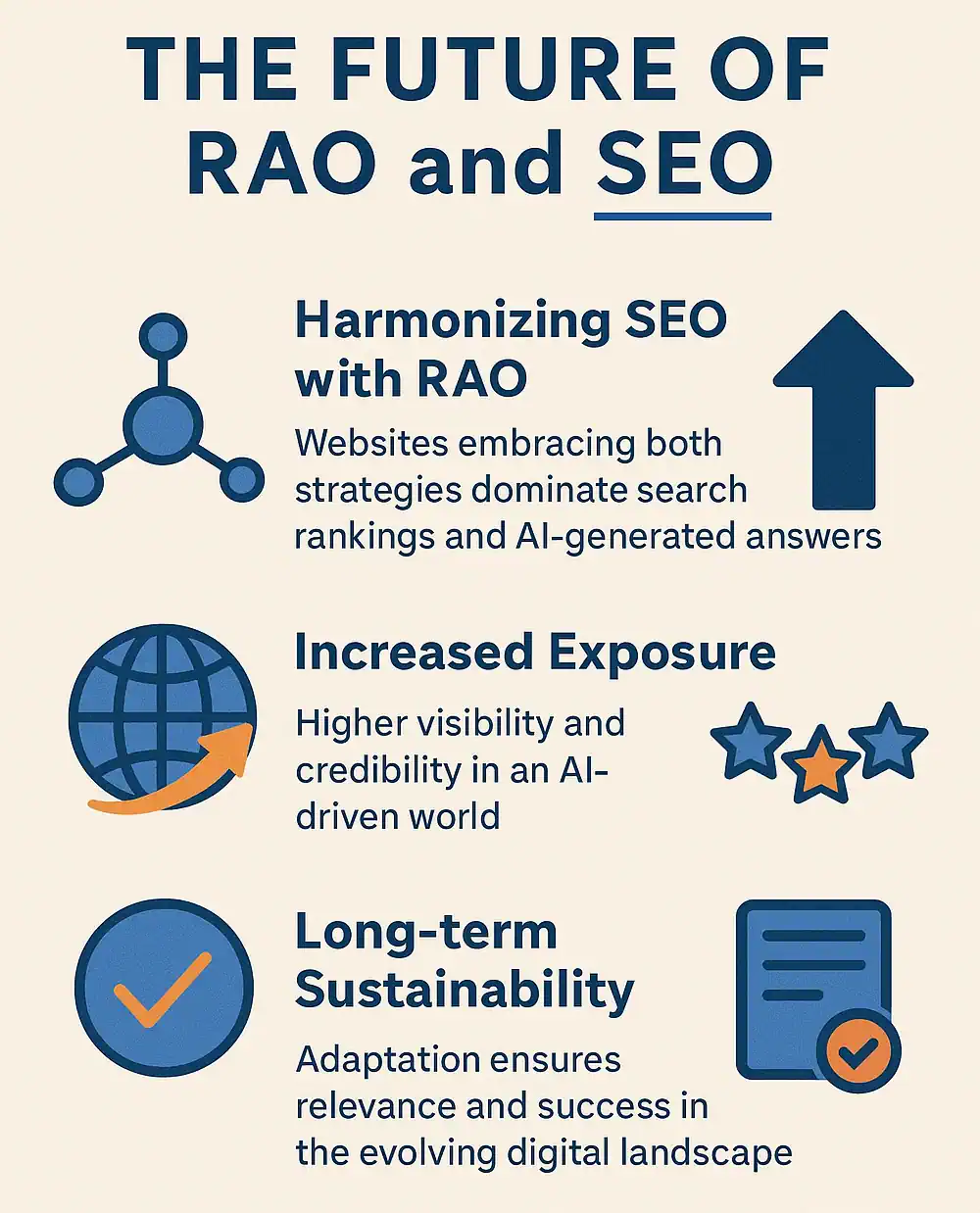
The future of digital visibility lies in harmonizing SEO with RAO. Websites that embrace both strategies will dominate not only search engine rankings but also AI-generated answers. This means more exposure, higher credibility, and long-term sustainability in an AI-driven world.
Traditional websites cannot afford to rely solely on search rankings anymore. Retrievability must be at the center of digital strategy, ensuring that valuable content is never lost in the AI ecosystem.
New Online Visibility Strategy
Retrieval-Augmented Optimization (RAO) is not just a buzzword—it’s a paradigm shift in online visibility. While SEO remains vital, RAO ensures your content thrives in a future where AI plays a central role in information retrieval.
For traditional websites, the path forward is clear: embrace structured content, adopt schema, optimize for conversational queries, and focus on retrievability. Those who act now will not only survive but thrive in the AI-powered digital landscape.


